
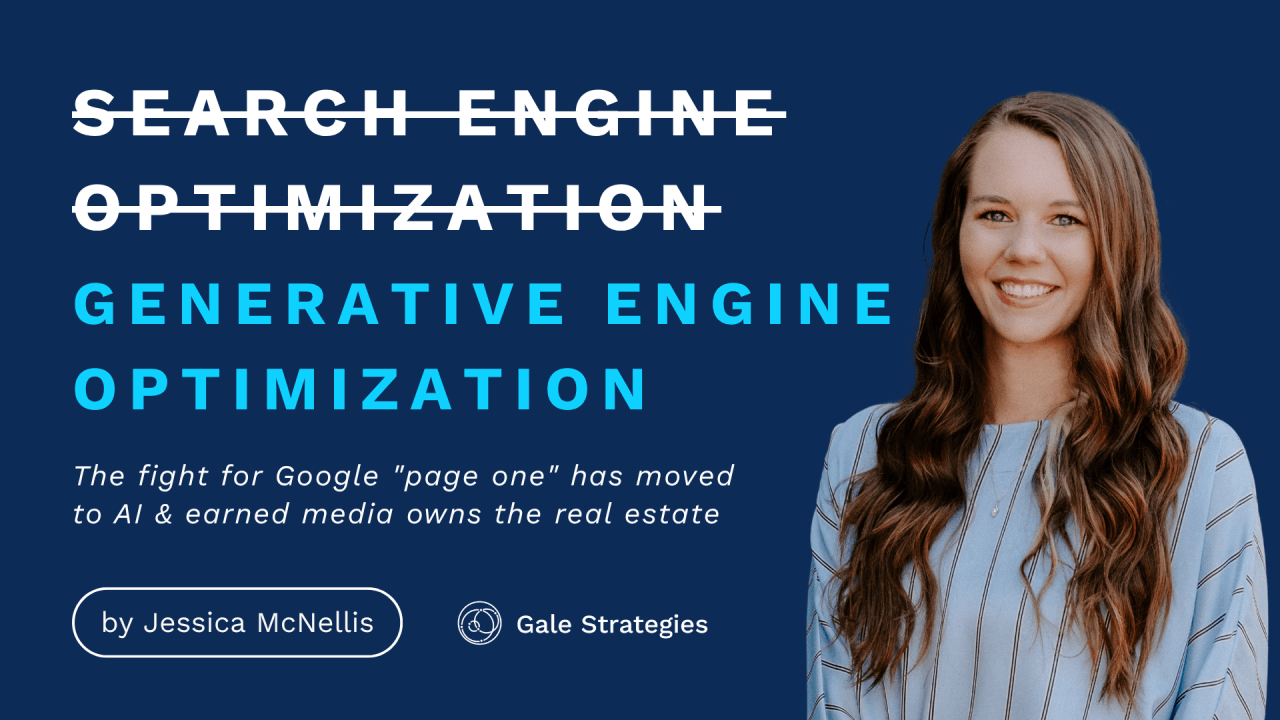

The fight for Google “page one” has moved to AI & earned media owns the real estate
Key Insights:
- 95 percent of AI citations come from unpaid media sources
- 82 percent come specifically from earned media coverage
- Half of all AI citations come from content published within the last 11 months
For more than two decades, search behavior followed a predictable pattern. You opened Google, typed a query, scanned the blue links, and clicked a result from page one. Entire industries were built around winning that real estate.
That era is ending.
Today, people are not just searching, they are asking. And not their network or social media or Reddit. They’re asking AI.
AI tools have quickly become default research assistants for everyone from consumers to journalists to executives. This shift is fundamentally changing how information is discovered, prioritized, and trusted.
Welcome to the era of GEO: Generative Engine Optimization.
From Search Engines to Answer Engines
Traditional search engines return a list of options. Generative AI returns a single, synthesized answer.
Instead of scanning ten links, users receive a confident response that often shapes perception before they ever visit a website or even see a source list. The visibility battle is no longer about ranking links. It is about being present inside the answer itself.
If SEO was about links and keywords, GEO is about narratives, credibility, and trust signals embedded in AI‑generated results.
How AI Chooses What to Trust
AI does not evaluate information the same way Google’s search algorithm does. While owned websites and technical optimization owned SEO, AI systems overwhelmingly rely on third‑party validation to determine credibility, namely, earned media.
According to research from Muck Rack, more than 95 percent of AI citations come from unpaid media sources, and 82 percent come specifically from earned media coverage. That means independent journalism, reputable publications, analyst reports, and expert commentary carry far more weight than brand‑controlled messaging.
Just as importantly, AI strongly favors recency. Muck Rack found that half of all AI citations come from content published within the last 11 months. Credibility is not only earned, it must be consistently refreshed.
AI systems are designed to reduce bias and misinformation. They look for agreement across neutral, trusted sources. Earned media delivers exactly that signal.
Put simply, AI trusts what others say about you far more than what you say about yourself.
Your Website Does Not Control Your AI Reputation
Your website still plays an important role. But as a discovery engine, it can no longer carry the full load.
When someone asks an AI tool, “What are the most trustworthy companies in this category?” the answer is not pulled from your homepage.
It is shaped by how often your brand appears in reputable publications, whether your leaders are quoted as experts, and how consistently third parties describe your role in the market.
If that coverage does not exist, or if it is outdated or inaccurate, AI fills in the gaps without you.
The Early SEO Moment We Are Living Through Again
This moment should feel familiar.
In the early days of Google, brands that invested early in SEO gained lasting advantages. Page one rankings drove credibility, traffic, and revenue for years. Late adopters faced higher costs and diminishing returns.
GEO represents a similar inflection point.
Right now, the AI answer layer is still relatively uncrowded. Many companies are not actively managing how they appear in AI‑generated responses. Recent earned media holds disproportionate influence, and early visibility compounds.
Soon, more brands will compete for the same limited citation space, AI narratives will harden, and changing perception will become significantly more difficult.
The equivalent of page one real estate on Google is being claimed right now inside ChatGPT, Claude, Copilot, Gemini, and future AI platforms.
Why Media Relations Is the Strongest Path to GEO
This is why earned media relations is no longer just a branding exercise or a vanity logo for your website. It is a discovery strategy.
A strong media relations program helps organizations influence how AI understands their category, ensures visibility for high‑intent audience questions, anchors positioning in neutral and trusted language, and refreshes credibility with the recency AI demands.
Earned media does not just drive awareness. In an AI‑first world, it becomes context that shapes future answers. And unlike paid media, it compounds over time.
The Bottom Line: AI is the New Page One
Search has evolved. Discovery has evolved. Trust has evolved.
AI is becoming the primary interface between people and information.
The brands that win in this new era are already investing deeply in earned media relations now, while the opportunity to claim AI answer real estate is still open.
This is the new “page one.”